
Running a restaurant is a high-wire act. Margins are razor-thin, staff are stretched, and competition is unforgiving. While much attention goes to food quality, staffing, and customer experience, the truth is that many restaurants quietly bleed money in ways that don’t show up on the menu. The culprit? Overbilling—deliberate or accidental—on the invoices that flow through your restaurant every single day.
From food suppliers to hydro providers, billing errors, duplicate charges, and inconsistent rates erode profitability. Restaurants lose thousands each year to hidden costs that managers don’t have the time—or bandwidth—to catch.
Industry data shows:
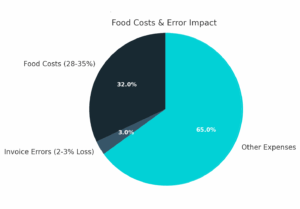
- Food costs make up 28–35% of a restaurant’s total expenses. (National Restaurant Association)
- Supplier invoices contain errors 15–25% of the time, usually small enough to slip by unnoticed but significant when compounded.
- In multi-location operations, up to 8% of invoices are duplicates or charged under the wrong account.
- On average, restaurants that don’t audit invoices lose 2–5% of annual revenue to hidden costs and overbilling.
This guide explores the most common pain points in restaurant expense management, why traditional processes fail, and how CompareABill’s Expense Optimization Platform eliminates waste while protecting margins.
Part 1: The Pain Restaurants Face
Limited Visibility Across Stores and Inconsistent Management Structures
Every new restaurant location brings growth—but also complexity. One store may use meticulous spreadsheets, while another relies on handwritten notes or ad-hoc systems. Inconsistency is the enemy of visibility.
A Deloitte study found that 74% of multi-location businesses struggle to consolidate vendor expenses across sites. Without standardized processes, operators can’t answer critical questions:
- Are two locations paying different rates for the same supplier?
- Which vendors are slipping in hidden fees?
- Are duplicate utility accounts quietly draining the budget?
The result: leaders are blind to where money is being lost.
 Duplicate Bills, Missed Savings, and Rising Costs
Duplicate invoices and redundant accounts are more common than most realize. For example, a single location may receive two hydro bills for the same address under slightly different account numbers.
In a recent restaurant industry audit, duplicate billing errors accounted for nearly 12% of all utility invoices reviewed. These mistakes are rarely malicious—but they’re costly. Without a system to catch them, businesses end up paying twice.
Manual Processes That Collapse Under Growth
Spreadsheets and manual reconciliation work fine with one or two sites, but they collapse as soon as expansion begins. According to Restaurant365, restaurants with five or more locations spend 10+ hours per week per manager reconciling expenses manually. That’s time pulled away from guest service and team leadership.
As paper piles up, errors slip through, vendor negotiations weaken, and staff morale suffers.
 Wasted Time Reconciling Accounts
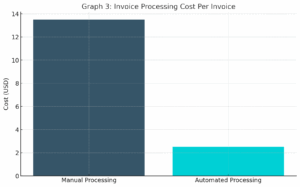
Reconciling accounts is tedious, repetitive, and expensive. Research from the Institute of Finance & Management shows that manual invoice processing costs between $12–$15 per invoice, compared to $2–$3 when automated. Multiply that by thousands of invoices per year, and the waste is staggering.
Beyond the dollars, it’s the opportunity cost—managers could be running kitchens, engaging customers, or training staff instead of drowning in paperwork.
Compliance Risks Without Audit-Ready Records
When invoices are scattered across filing cabinets and email inboxes, audit risk skyrockets. A KPMG compliance report revealed that lack of digitized, audit-ready records increases the likelihood of regulatory fines by 40%.
Even when regulators aren’t knocking, the inability to pull a clean invoice history leaves businesses vulnerable in disputes with suppliers.
Pressure to Prove ROI on Cost Controls
Boards and owners increasingly demand hard proof of cost-control measures. Yet without clean data, leaders can’t show where savings are being captured—or where leaks remain. As one industry survey revealed, only 27% of restaurants can confidently measure ROI on expense reduction initiatives.
 The Human Factor: Long Days, Short Margins
The operational burden often falls hardest on chefs and managers. They’re already working long days handling staff, food quality, and customer service. Asking them to comb through invoices line by line is unrealistic.
But the stakes are high: Studies show supplier invoice errors alone can erode margins by 2–3% annually. For a restaurant running on 8–10% profit, that’s the difference between healthy growth and barely breaking even.
Part 2: The CompareABill Solution
CompareABill is built for this reality. It’s an Expense Optimization Platform designed to protect restaurants from the billing errors, hidden charges, and inefficiencies that eat away at profit.
Our mission: make overbilling impossible to hide.
The Three-Tier Comparison System
CompareABill closes the oversight gap using a three-tiered audit system that no human process can match:
Your Historical Data
Every bill is compared against your past invoices across all locations, contracts, and timeframes. If a supplier suddenly hikes prices or changes terms, CompareABill flags the anomaly instantly.
Example: A hydro provider increases rates for one store by 5% but leaves others unchanged. CompareABill catches it immediately.
Crowd Benchmarking (Anonymous)
We benchmark your invoices against peers in your region and across industries. This goes beyond surface-level comparisons—factors like square footage, service type, and vendor relationships are included.
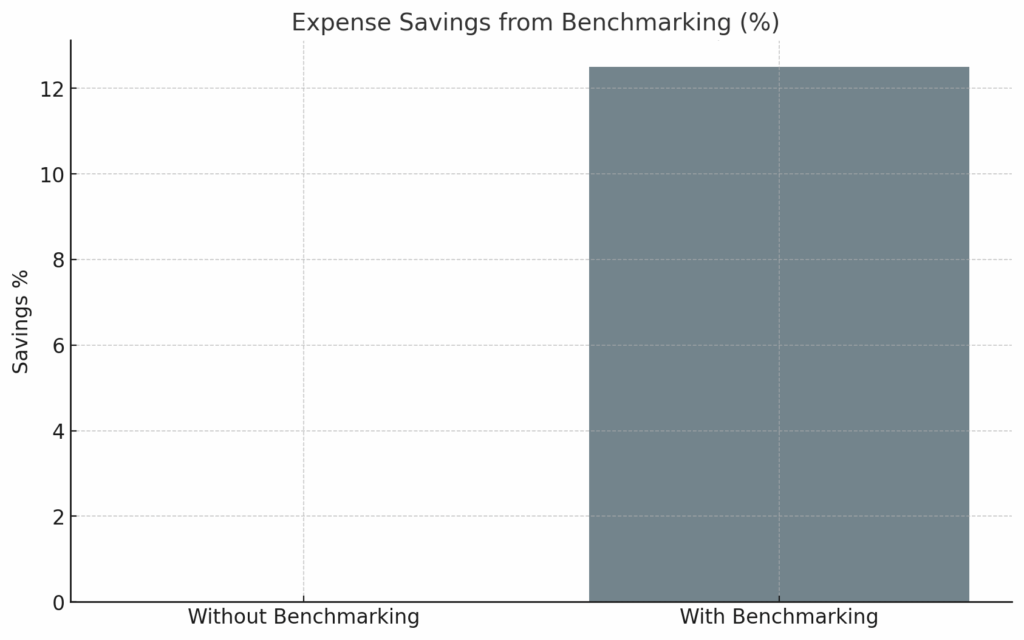
According to industry data, restaurants using benchmarking can lower recurring costs by 10–15% within the first year.
Industry-Published Standards
Finally, invoices are checked against published norms. If a waste management company charges well above industry averages, CompareABill exposes the discrepancy.
Together, this system ensures you’re never in the dark about whether you’re paying fair, consistent, and competitive rates.
Built for Restaurants
CompareABill leads with food invoice savings because food is both the biggest expense and the most error-prone.
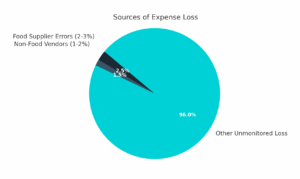
- Food costs represent 30% of sales, but invoice errors eat 2–3% of that.
- Our platform flags duplicate line items, unapproved price hikes, and out-of-contract substitutions that managers would otherwise miss.
- In pilot programs, CompareABill identified $18,000+ in annual savings per location on food invoices alone.
This isn’t theory—it’s money that stays in your business.
Expanding Protection Across the Provider Stack
While food is the gateway, CompareABill protects margins across every major service category:
- Utilities: Catch duplicate hydro, water, or gas accounts.
- Telecom & Internet: Expose rate creep or misapplied fees.
- Maintenance & Services: Standardize contracts and flag hidden surcharges.
According to PwC, non-food vendor overbilling contributes another 1–2% loss in annual revenue for restaurants with multiple locations. CompareABill closes this gap by holding every provider accountable.
Part 3: Value by Audience
Restaurant Owners (Independent or Franchise)
Owners want confidence that every invoice is correct, and that margins are protected across all stores. CompareABill delivers:
- A single dashboard view across locations.
- Clear, benchmarked savings reports to prove ROI.
- Confidence that expansion won’t introduce hidden costs.
General Managers
GMs juggle labor, customer service, and day-to-day execution. CompareABill gives them:
- Automated invoice capture with zero training required.
- Time savings—no more manual reconciliations.
- The ability to contribute to cost savings without increasing workload.
Chefs & Kitchen Managers
Food quality is their domain, not paperwork. CompareABill allows them to:
- Offload the burden of policing invoices.
- Ensure food supplier charges are accurate without manual checks.
- Focus fully on the kitchen, knowing margins are protected.
Part 4: Why Act Now?
 Margins are under more pressure than ever:
- Food costs have risen 22% since 2019.
- Utility costs jumped 15% in the last two years.
- Labor shortages mean managers have less time than ever for administrative tasks.
In this environment, every hidden overcharge matters. Waiting means leaving money on the table month after month.
Restaurants that adopt CompareABill see:
- Immediate recovery of duplicate or inflated charges.
- 10–15% reduction in controllable expenses within the first 6–12 months.
- Standardized, audit-ready records that protect against compliance and regulatory risk.
The question isn’t whether overbilling is happening—it’s how much it’s costing your restaurant today.
Part 5: Your Solution Awaits
Restaurants are in the business of food and hospitality, not invoice policing. Yet unchecked expenses are one of the biggest threats to profitability.
CompareABill was built to solve this problem. By combining historical data, crowd benchmarking, and industry standards, our platform makes overbilling impossible to hide and ensures every dollar stays where it belongs: in your business.
Now is the time to protect your margins, reclaim wasted hours, and bring accountability to every provider in your expense stack.